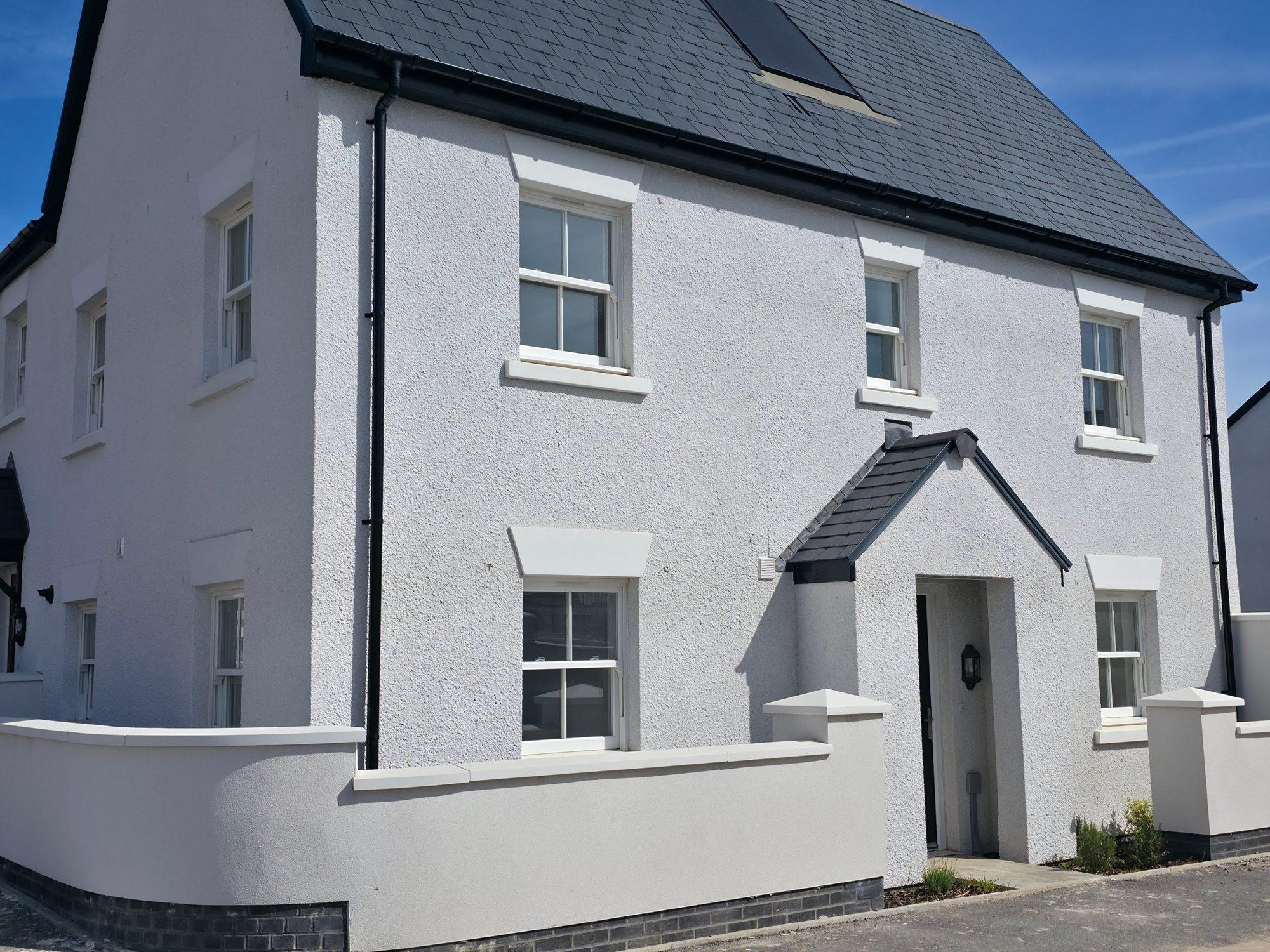
Pebble Dash and Roughcast
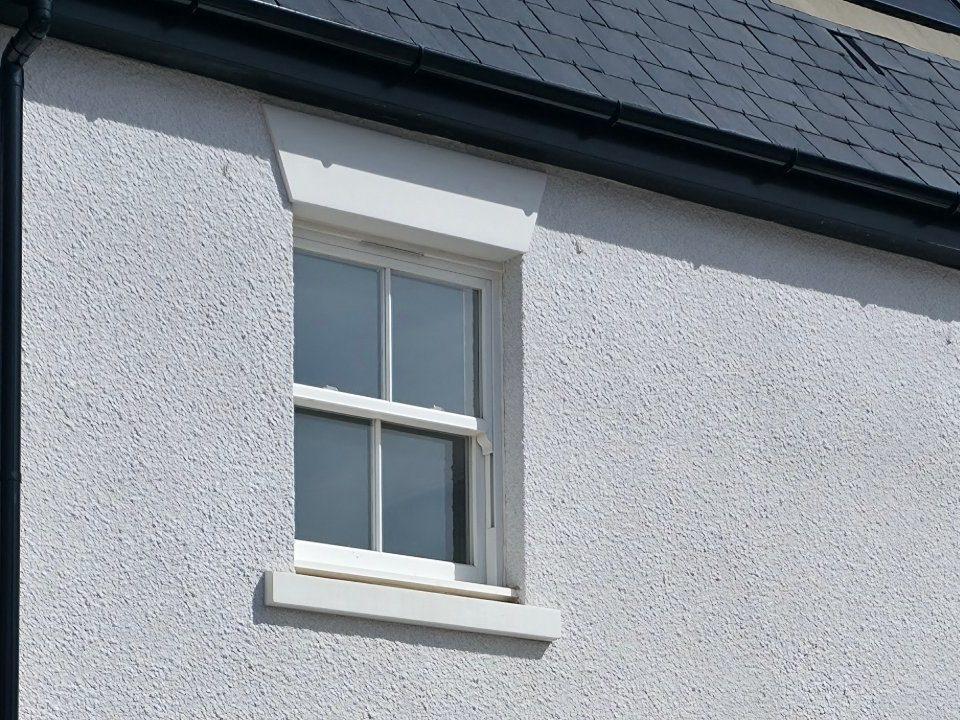
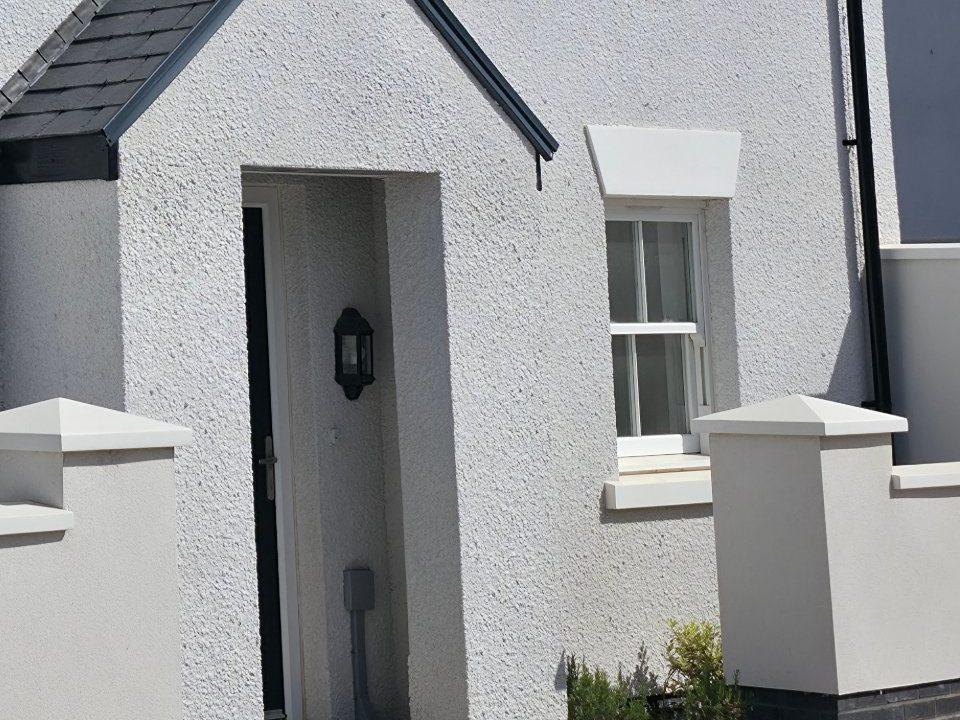
Pebble dash and roughcast are textured render finishes that have protected British homes for generations, especially on exposed and coastal properties. With pebble dash ("dry dash"), washed pebbles or chippings are thrown onto a freshly applied coat of render, so the stones show. With roughcast ("wet dash" or "harling"), the stones are mixed into the render and thrown on as one coat.
We apply new dash finishes, repair existing ones, render over pebble dash where it's sound, and remove it where that's the right answer.
What we do
- New pebble dash and roughcast: new finishes on new build, extensions and refurbishment
- Rendering over pebble dash: a smooth or textured render finish applied over existing pebble dash, where the existing finish is sound
- Removing pebble dash: taking off existing dash where it's failing or where the wall needs to be re-rendered
- Repairs: patching damaged or missing areas of dash
Render over or remove?
It depends on the condition of the existing pebble dash and what's underneath it. We'll inspect the walls and tell you which approach suits your building before we quote.
Covering is usually less disruptive. Pebble dash was often put on to hide poor or weathered brickwork, so taking it off can expose damaged brick and failed pointing that then needs repairing.
Machine-applied roughcast
Roughcast doesn't have to be the traditional wet dash thrown by hand and then painted. We can get the same texture with a modern through-coloured render system, sprayed on with a diesel or electric render machine.
The colour runs right through the render, so it doesn't need painting. The machine gives an even texture across large wall areas and is quicker on site, which suits new build and larger developments.
Traditional roughcast is often the better choice for repairs and matching existing work. We'll tell you which method suits your building before we quote.
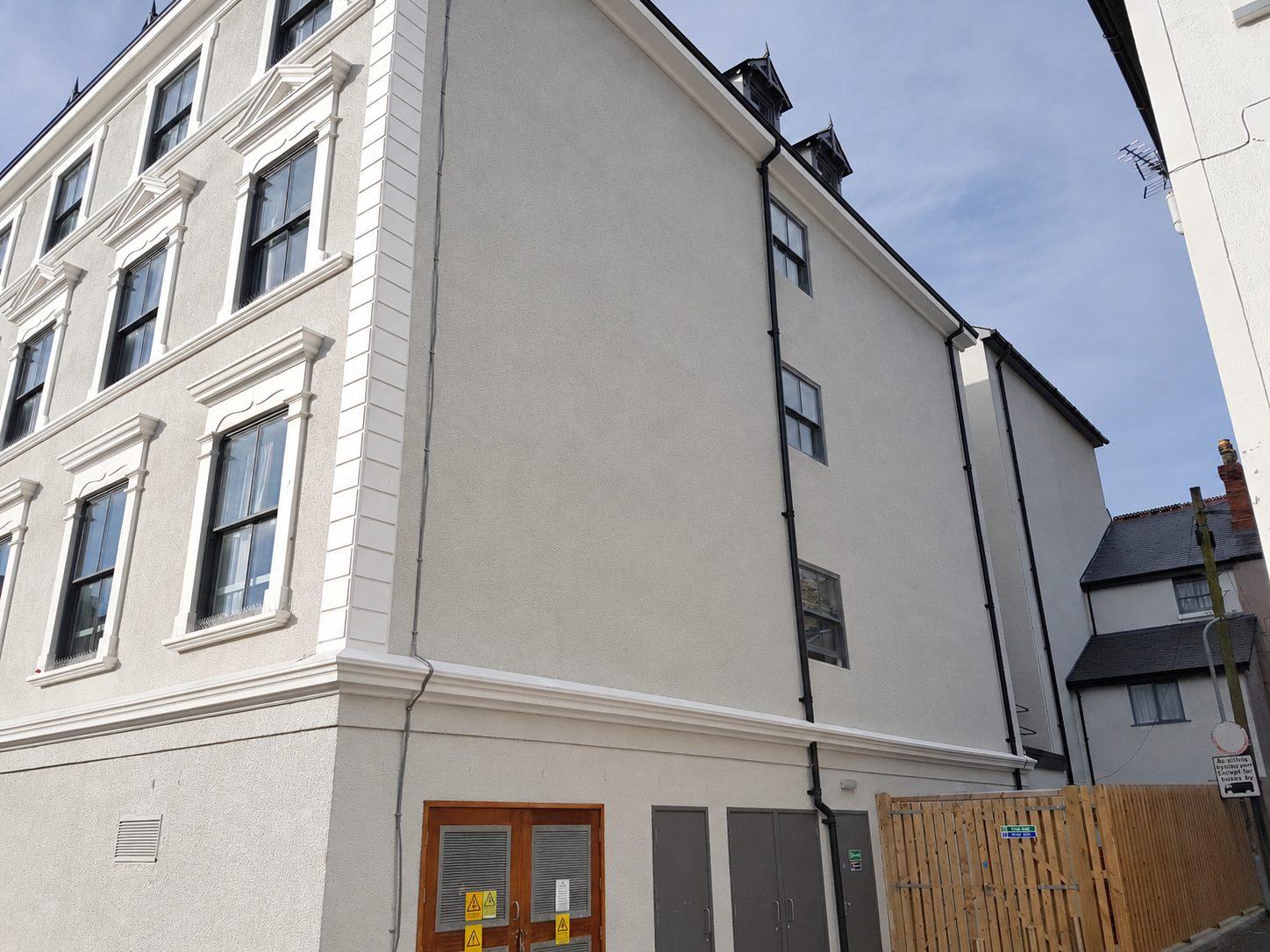
Add mouldings to the same contract
Updating a pebble dashed house is a good time to add cornices, window heads, cills and quoins. We make them in our own factory and fit them as part of the same job.
How we do it
Survey: we tap-test for hollow areas and check for cracks, damp and the condition of the wall underneath.
Agree the approach: new dash, repair, render over or removal. We explain the options and what each involves.
Prepare: we cut out blown or loose areas, fit beads and stops, and protect windows, doors and drains.
Base coat: we apply a levelling or base coat, keyed for the next coat.
Finish: for dash, we apply the final coat and throw the stones evenly; for roughcast, the textured wet coat; for a smooth re-render, the finish coat.
Cure and check: we protect the work from frost, rain and fast drying, then check the finish is even.
Common questions
Can you render over pebble dash?
Yes, where the existing pebble dash is sound. We'll check it first.
Can roughcast be sprayed on by machine?
Yes. With a through-coloured render system we spray the finish on with a diesel or electric render machine to get the roughcast texture. The colour is in the render, so it doesn't need painting.
Can you match existing pebble dash for a repair or extension?
We'll match the stone and colour as closely as possible. Older dash weathers in, so an exact match can't always be guaranteed, and we'll tell you before we start.
What's the difference between pebble dash and roughcast?
In pebble dash, the stones are thrown onto a wet coat and stay visible on the surface. In roughcast, the stones are mixed into the render and thrown on together, giving a more uniform, coarser texture.
Should I remove pebble dash or cover it?
Covering is usually less disruptive, because removal can damage the brick face and expose failed pointing. We'll recommend the best option after a survey.
Can pebble dash be painted?
Yes, with a suitable exterior masonry paint, but painting brings regular repainting, whereas unpainted dash needs little maintenance.
Why is my pebble dash coming away?
Usually water has got behind it, through cracks or leaking gutters, then frozen and pushed the render off. Hollow-sounding areas are coming away and should be dealt with before they fall.
Do I need planning permission to change from pebble dash to smooth render?
Possibly. Changing the look of a building may need permission, and rules are stricter in conservation areas, National Parks, Areas of Outstanding Natural Beauty and on listed buildings. Check with your local council.
When can the work be done?
In dry, frost-free weather above about 5°C. Fresh work must be protected from frost and fast drying.
What affects the cost?
Whether we're repairing, covering or removing, how much of the wall is hollow, the condition of the brickwork underneath, the wall area and access, and the finish chosen. We price after a survey.
Approved applicator




Approved applicator for VPI, Weber, PRB and EWI Pro systems.
Based in Aberdare, our rendering team works across South Wales and southern England, including Cardiff, Bristol, Plymouth and London. For projects combining rendering with our architectural mouldings, we work throughout the UK.